This extremely entertaining update of the 1985 original has everything I enjoy seeing in a horror movie: humor, low stakes suspense, and an effervescent enthusiasm for making fun of itself.
I thoroughly enjoyed watching Fright Night from beginning to end, laughing along with my friends at all the ridiculous moments, most of which were delivered by Colin Farrell, who seemed to luxuriate in making his role seem as hilariously perverted and degrading/deviant as possible. Even when he's sucking blood out a parade of hapless teenagers, Farrell makes it brazenly obvious that what's really happening is intense, unbridled, and inappropriate sexual pleasure. It is extremely entertaining to watch Farrell run with this role, and I think he did a really smart interpretation of it that I'm not sure others could deliver.
The only problems I had with the film were that 1) the vampires were way scarier when they were not CGI enhanced than when they were. The climactic final monster scene was so overdone CGI-wise that I burst out laughing at the site of it. Leave Farrell with his black contacts and creepy just-jizzed-in-my-pants face alone. And 2) the kid playing the main character appeared to be a 30 year old man*. But he still did a good job in his role, as did the Russell Brand lookalike who played a very apropos satire of Criss Angel.
Overall, VERY worth your time, unless you watch the above clip and hate it. Because if you don't get what's funny about that clip, you won't think Fright Night is funny, at all... guy.
*Horrifying realization: he's younger than me.
Showing posts with label Remake. Show all posts
Showing posts with label Remake. Show all posts
05 October 2011


02 August 2011
02 January 2011
True Grit (2010)
- Fantastic
- Beautiful to behold
- Quotable
- Makes me want to go out into the wilderness and overall be braver, stronger, and better at using the vocabulary I have
- All around excellent
- Beautiful to behold
- Quotable
- Makes me want to go out into the wilderness and overall be braver, stronger, and better at using the vocabulary I have
- All around excellent
22 September 2010
Prince of Persia: Sands of Time (2010)
Caution: SPOILERS ABOUND!
Jake Gyllenhaal runs around in the desert flailing swords and other weapons while half-heartedly courting an extremely beautiful but predictably shrewish woman. Oh crap! Everyone dies!! But wait—here come the magic swirling sands of time travel. BOOM! Every problem is fixable when you have the ability to access the ultimate do-over. Falling in love all over again, but now under the perfect circumstances instead of really really tragic ones. The end!
Ok now, despite what you may expect, I didn’t hate this movie. Even though the plot was decidedly silly, I still was left with a feel-good glow after all was said and done. Why? Several reasons:
1) I actually really enjoyed the wholesomeness of the romance between Gyllenhaal’s main character, Dastan, and Tamina, played by Gemma Arterton. There weren’t any of those lurid almost-but-not-really-sex-and why-would-anyone-like-this-when-they-could-just-watch-porn scenes. Instead there was some sweet hand holding and maybe two kisses. Refreshing.
2) I thought the color was really well done. Not something I usually notice unless it’s especially good or bad, and in this case, the images were just really beautiful to look at scene after scene. They were tied together into one wonderfully vibrant palette of oranges and blues, for the most part. Very nice.
3) The absurd moment of realizing I was looking at Alfred Molina in brown-face (playing the character Sheik Amar). What the hell? So ridiculous that I had to laugh. (Almost as ludicrous as Jake Gyllenhaal playing a “Persian” prince with an inexplicably British accent.)
4) Sometimes I like a sugar-coated happy ending and Prince of Persia definitely delivered in that regard. I was actually pretty appalled over the course of the movie as it became clear that literally everyone close to Dastan was going to die. So when the end rolled around and everyone was alive again, my relief was palpable.
So. Not the best entry for the one year anniversary of A Phantasmagoria of Complaints, largely because I didn’t really have too many complaints. However, I’ve enjoyed blogging for a year now, and I hope you’ve enjoyed reading it.
The Phantasmagoria continues soon with a photo of a yet to be baked celebratory one year blog anniversary dessert, a top and bottom five (or ten?) list of movies that feature a jump to the future (or maybe time travel in general), as well as a review of a friend’s exciting indie film that I’ll provide a link to so you can watch it if you like.
As always, please let me know if there is anything you’d like to see reviewed here, or if you have a bone to pick with me regarding one of my reviews.
Thanks for reading! Always good to see hits on my statcounter.
-Cait, The Complainer
Jake Gyllenhaal runs around in the desert flailing swords and other weapons while half-heartedly courting an extremely beautiful but predictably shrewish woman. Oh crap! Everyone dies!! But wait—here come the magic swirling sands of time travel. BOOM! Every problem is fixable when you have the ability to access the ultimate do-over. Falling in love all over again, but now under the perfect circumstances instead of really really tragic ones. The end!
Ok now, despite what you may expect, I didn’t hate this movie. Even though the plot was decidedly silly, I still was left with a feel-good glow after all was said and done. Why? Several reasons:
1) I actually really enjoyed the wholesomeness of the romance between Gyllenhaal’s main character, Dastan, and Tamina, played by Gemma Arterton. There weren’t any of those lurid almost-but-not-really-sex-and why-would-anyone-like-this-when-they-could-just-watch-porn scenes. Instead there was some sweet hand holding and maybe two kisses. Refreshing.
2) I thought the color was really well done. Not something I usually notice unless it’s especially good or bad, and in this case, the images were just really beautiful to look at scene after scene. They were tied together into one wonderfully vibrant palette of oranges and blues, for the most part. Very nice.
3) The absurd moment of realizing I was looking at Alfred Molina in brown-face (playing the character Sheik Amar). What the hell? So ridiculous that I had to laugh. (Almost as ludicrous as Jake Gyllenhaal playing a “Persian” prince with an inexplicably British accent.)
4) Sometimes I like a sugar-coated happy ending and Prince of Persia definitely delivered in that regard. I was actually pretty appalled over the course of the movie as it became clear that literally everyone close to Dastan was going to die. So when the end rolled around and everyone was alive again, my relief was palpable.
So. Not the best entry for the one year anniversary of A Phantasmagoria of Complaints, largely because I didn’t really have too many complaints. However, I’ve enjoyed blogging for a year now, and I hope you’ve enjoyed reading it.
The Phantasmagoria continues soon with a photo of a yet to be baked celebratory one year blog anniversary dessert, a top and bottom five (or ten?) list of movies that feature a jump to the future (or maybe time travel in general), as well as a review of a friend’s exciting indie film that I’ll provide a link to so you can watch it if you like.
As always, please let me know if there is anything you’d like to see reviewed here, or if you have a bone to pick with me regarding one of my reviews.
Thanks for reading! Always good to see hits on my statcounter.
-Cait, The Complainer
02 July 2010
The A-Team (2010)
I thought this movie was oddly boring, considering its overbearing preponderance of supposed-to-be-riveting action sequences. Also, because The A-Team is based on a long-running TV series of the same name, and is essentially fan service to people who already have their own connections and obsessions with individual characters, the movie does not really include any compelling efforts toward creating audience/character empathy. Kind of a problem for me because I never watched the TV show.
Throughout the movie I felt like there was no point in watching it and I had no investment in whether the characters got what they wanted or not. I was relieved when it was over.
The only aspect I enjoyed was watching the guy from District 9 show everyone that he can act. Really well. His excellent performance in District 9 wasn't a fluke! I’ll look forward to watching him in future movies.
Clearly my opinion regarding The A-Team is going to the opposite of someone’s who used to watch the show all the time and is already highly invested in the characters and their misadventures.
The main point that I want to convey here is that The A-Team is not worth watching except to the already initiated. Unsurprising, maybe, but still disappointing.
Throughout the movie I felt like there was no point in watching it and I had no investment in whether the characters got what they wanted or not. I was relieved when it was over.
The only aspect I enjoyed was watching the guy from District 9 show everyone that he can act. Really well. His excellent performance in District 9 wasn't a fluke! I’ll look forward to watching him in future movies.
Clearly my opinion regarding The A-Team is going to the opposite of someone’s who used to watch the show all the time and is already highly invested in the characters and their misadventures.
The main point that I want to convey here is that The A-Team is not worth watching except to the already initiated. Unsurprising, maybe, but still disappointing.
19 May 2010
Robin Hood (2010)
Ok blog readers. I am going to tell you something. Get ready for it. Ok, prepared?
I’m a feminist.
No, not the kind from the ‘60s. Not the kind from the ‘70s or ‘80s. Not even really the kind from the ‘90s either, even though that's when I grew up. The kind from right now, probably more aptly named queer-something-or-other. I’m into thinking about things like gender, sex, sexuality, queerness, LGBT issues, etc. And specifically thinking about how these sometimes broad, intangible concepts intersect and interact with pretty much every aspect of real life that you could imagine. And how those interactions, whether under-wraps or overstated in day to day life, are inevitably and often interestingly manifested in the media, specifically film.
In case you didn’t realize that I had this thought pattern from older posts, I just thought I should let you know. Because I am about to go off on a pretty specific aspect of the latest cinematic iteration of Robin Hood Hollywood is offering. You know. The one that’s out right now, with Russell Crowe and Cate Blanchett. Yeah.
Here’s the thing: this movie is dumb. I don’t even know if I can confidently say that this movie ever even had the potential to be good. I mean, you take a story that’s been done many times over on film and you pretty much give us the exact same thing with different actors. I think there was one moment of suspense in the whole thing. One. And the fight scenes. The endless and repetitive fight scenes. Please stop.
But even if you set aside the unoriginality of the most recent Robin Hood—which I grant that you could, if you’re a huge fan of the mythology and you’re really into seeing “the olden days” reconstructed with a big budget—even then. Even. Then. You can’t ignore the annoyance of the treatment of the character of Marion Loxley, played by Cate Blanchett.
She starts out as this ridiculously capable woman who runs a whole town for ten years during her husband’s absence. She manages the household, she runs off thieves, she fights for the townpeoples’ rights, etc. Basically she performs the roles of Lord and Lady of the Manor simultaneously and effectively, albeit not without struggle. Great. This is good.
But then guess what happens. Russell Crowe shows up and through some silly and contrived arrangement gets to pretend that Marion is his wife. All of a sudden it’s “Wife, get me this” “Wife, show me the village so I don’t look like an idiot” and “Wife, ask me nicely.” So she swoons. She swoons. After approximately three days of knowing each other, they’re exchanging dramatic ‘I love you’s and slow dancing prom style to some Medieval band. Apparently for no other reason than that Robin Hood put her in her place. Awesome.
And that’s not all. The filmmakers have the audacity to have Marion follow Robin into battle, predictably striving to do some heroics while actually just messing everything up because of her unsurprising ineptitude at hand to hand combat. Guess who saves her. I’m lucky my eyes didn’t get stuck rolling so far back into my head at this particular scene.
But do you know what? I’m not even mad about Robin Hood. I think we all could have predicted that this was the type of female “heroine” that we’d be offered in this type of movie. Plus, historically, this version of Marion would probably have been burned at the stake for her extremely progressive attitude. So I guess this is progress.
What I’m really mad about is the recent news that they’re planning on remaking The Girl with the Dragon Tattoo with Hollywood actors. As in (probably) a more conventional leading lady, a more palatable storyline, and less grittiness. (They’re also planning on re-doing the recent awesome movie Let the Right One In, but that’s fodder for a whole other angry essay.)
Anyway, this “leave the Swedes alone” moment isn’t an entirely unrelated tangent. Because the fact that Western mass media markets actually prefer Blanchett’s performance of the acceptable version of a the life and romance of a “strong woman” over something like the remarkably different and varied versions of femininity, feminism, sexuality, sex, gender, etc that world has to offer… That’s what really bothers me.
Seriously, it’s 2010, and we’re still all buying into the whole “she couldn’t do it without a strong man” crap? How is this still even a thing? I’m so tired of it. I swear to God I’d pay $100 a ticket if Hollywood was to produce a movie that in any way took a risk when it came to how it handled its female characters.
Am I the only one?
I’m a feminist.
No, not the kind from the ‘60s. Not the kind from the ‘70s or ‘80s. Not even really the kind from the ‘90s either, even though that's when I grew up. The kind from right now, probably more aptly named queer-something-or-other. I’m into thinking about things like gender, sex, sexuality, queerness, LGBT issues, etc. And specifically thinking about how these sometimes broad, intangible concepts intersect and interact with pretty much every aspect of real life that you could imagine. And how those interactions, whether under-wraps or overstated in day to day life, are inevitably and often interestingly manifested in the media, specifically film.
In case you didn’t realize that I had this thought pattern from older posts, I just thought I should let you know. Because I am about to go off on a pretty specific aspect of the latest cinematic iteration of Robin Hood Hollywood is offering. You know. The one that’s out right now, with Russell Crowe and Cate Blanchett. Yeah.
Here’s the thing: this movie is dumb. I don’t even know if I can confidently say that this movie ever even had the potential to be good. I mean, you take a story that’s been done many times over on film and you pretty much give us the exact same thing with different actors. I think there was one moment of suspense in the whole thing. One. And the fight scenes. The endless and repetitive fight scenes. Please stop.
But even if you set aside the unoriginality of the most recent Robin Hood—which I grant that you could, if you’re a huge fan of the mythology and you’re really into seeing “the olden days” reconstructed with a big budget—even then. Even. Then. You can’t ignore the annoyance of the treatment of the character of Marion Loxley, played by Cate Blanchett.
She starts out as this ridiculously capable woman who runs a whole town for ten years during her husband’s absence. She manages the household, she runs off thieves, she fights for the townpeoples’ rights, etc. Basically she performs the roles of Lord and Lady of the Manor simultaneously and effectively, albeit not without struggle. Great. This is good.
But then guess what happens. Russell Crowe shows up and through some silly and contrived arrangement gets to pretend that Marion is his wife. All of a sudden it’s “Wife, get me this” “Wife, show me the village so I don’t look like an idiot” and “Wife, ask me nicely.” So she swoons. She swoons. After approximately three days of knowing each other, they’re exchanging dramatic ‘I love you’s and slow dancing prom style to some Medieval band. Apparently for no other reason than that Robin Hood put her in her place. Awesome.
And that’s not all. The filmmakers have the audacity to have Marion follow Robin into battle, predictably striving to do some heroics while actually just messing everything up because of her unsurprising ineptitude at hand to hand combat. Guess who saves her. I’m lucky my eyes didn’t get stuck rolling so far back into my head at this particular scene.
But do you know what? I’m not even mad about Robin Hood. I think we all could have predicted that this was the type of female “heroine” that we’d be offered in this type of movie. Plus, historically, this version of Marion would probably have been burned at the stake for her extremely progressive attitude. So I guess this is progress.
What I’m really mad about is the recent news that they’re planning on remaking The Girl with the Dragon Tattoo with Hollywood actors. As in (probably) a more conventional leading lady, a more palatable storyline, and less grittiness. (They’re also planning on re-doing the recent awesome movie Let the Right One In, but that’s fodder for a whole other angry essay.)
Anyway, this “leave the Swedes alone” moment isn’t an entirely unrelated tangent. Because the fact that Western mass media markets actually prefer Blanchett’s performance of the acceptable version of a the life and romance of a “strong woman” over something like the remarkably different and varied versions of femininity, feminism, sexuality, sex, gender, etc that world has to offer… That’s what really bothers me.
Seriously, it’s 2010, and we’re still all buying into the whole “she couldn’t do it without a strong man” crap? How is this still even a thing? I’m so tired of it. I swear to God I’d pay $100 a ticket if Hollywood was to produce a movie that in any way took a risk when it came to how it handled its female characters.
Am I the only one?
19 April 2010
Ponyo (2008)
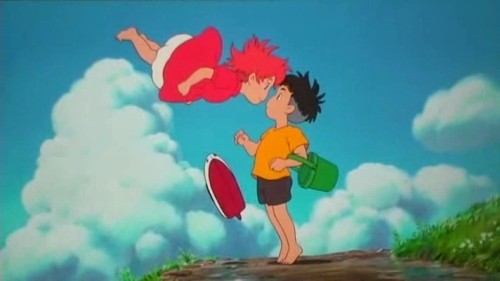
I was really delighted by Ponyo, Hayao Miyazaki’s latest fantastical children’s tale that springs from the most basic details of Hans Christian Andersen’s story “The Little Mermaid”.
Because I am a huge Miyazaki fan, it came as no surprise that I was entirely charmed by this movie. However, watching Ponyo helped me articulate to myself just what, exactly, I find enjoyable about Miyazaki’s films.
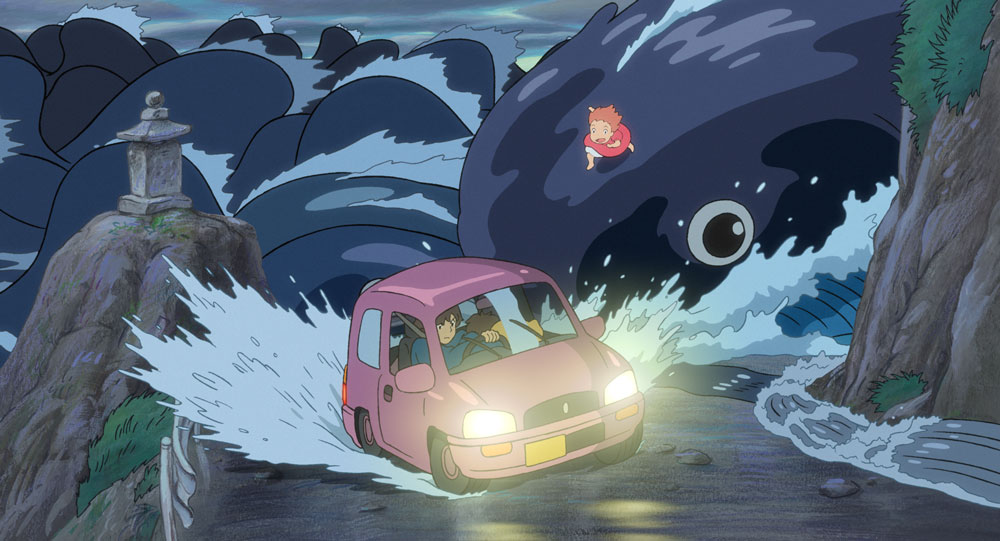
The aspects I enjoyed the most, in the case of Ponyo specifically, were the expressiveness of the animation and the near perfect conveyance of the wonderfully illogical imagination of children via the fantastical storyline and some of the film’s imagery.
In Ponyo the ocean is alive. It is filled with towering waves the size of monsters, fish-cronies that melt into the water, baby-faced mermaids that bulge into huge carp, goldfish that shape-shift into small magical girls, inexplicably giant women who save ships from disaster, and a myriad of other weird creatures and moments that just are. And the best part—I didn’t need an explanation for any of it. Something about Miyazaki’s style both enables and emboldens me to simply appreciate the incredible creativity that goes into the film and accept it for what it is.
When I watch Miyazaki movies I feel happy, boundless, and hopeful. I feel like I can tackle life’s greatest problems and challenges without any of the grown-up baggage that so often drags me down in real life (i.e. fears, anxieties, memories of failure, etc). I think this is because in Miyazaki’s worlds strange, awful, scary things are happening all the time all around, but the children that have to get through it do so without batting an eye.
If only we could all live somewhere in Miyazaki’s dream worlds!
Because I am a huge Miyazaki fan, it came as no surprise that I was entirely charmed by this movie. However, watching Ponyo helped me articulate to myself just what, exactly, I find enjoyable about Miyazaki’s films.
The aspects I enjoyed the most, in the case of Ponyo specifically, were the expressiveness of the animation and the near perfect conveyance of the wonderfully illogical imagination of children via the fantastical storyline and some of the film’s imagery.
In Ponyo the ocean is alive. It is filled with towering waves the size of monsters, fish-cronies that melt into the water, baby-faced mermaids that bulge into huge carp, goldfish that shape-shift into small magical girls, inexplicably giant women who save ships from disaster, and a myriad of other weird creatures and moments that just are. And the best part—I didn’t need an explanation for any of it. Something about Miyazaki’s style both enables and emboldens me to simply appreciate the incredible creativity that goes into the film and accept it for what it is.
When I watch Miyazaki movies I feel happy, boundless, and hopeful. I feel like I can tackle life’s greatest problems and challenges without any of the grown-up baggage that so often drags me down in real life (i.e. fears, anxieties, memories of failure, etc). I think this is because in Miyazaki’s worlds strange, awful, scary things are happening all the time all around, but the children that have to get through it do so without batting an eye.
If only we could all live somewhere in Miyazaki’s dream worlds!
21 March 2010
Alice in Wonderland Commentary Followup
...Because it was so big it merited its own post.
@Chris
You say that you don’t like Tim Burton for two reasons. 1) “his dark and creepy imagery that is portrayed in nearly all of his films” and 2) “the constant praise by die hard conformist followers of "Tim Burton is hip and weird, thus awesome… so I'll believe he is hip and awesome too!" crowd.” But then later you say “knowing the bizarreness naturally associated with the Alice in Wonderland saga, I couldn't bring myself to hate this movie but at the same time, I wasn’t overly captivated or wowed by it.”
What I gather from your commentary is that you don’t like Tim Burton because of the bizarre imagery and dark themes he often uses and because he is, in your opinion, overrated by people who are simply following the crowd. But in this case you grudgingly accept Burton’s bizarre imagery in Alice because the pre-existing story world seems to require it.
So my question for you, Mr. Guy Who Loves Dark Twisted Movies Like The Tin Drum, is would you be willing to accept Burton’s work, and even maybe really enjoy it, if he wasn’t so popular? Or is it something in particular about Burton’s aesthetic/thematic creepiness that puts you off?
Just wondering!
@Alla
With regard to the moral of the story:
I didn’t say that there is no moral to the story in this decidedly different variation of a distinctly Disney movie. What I said was that I was relieved that Burton didn’t rely on elaborate yet obvious direct metaphors to carry his heroine through her fantasy world. In other words, what I was dreading was a sort of Wizard of Oz scenario in which each character presented to Alice in Wonderland has a direct counterpart in the real world—i.e. the Red Queen being directly relatable to some tyrannical figure in the real world, the Mad Hatter being analogous to a quirky acquaintance, etc. I was so happy to see that a lot of the characters in this version of Alice were actually just independently random (odd, endearing, frightening, horrifying) weirdos.
I also liked that the blue butterfly at the end (presumably the now metamorphosized Absolom the blue caterpillar) showed up in the “real” world, thereby further highlighting the tenuous boundaries between the fantasy space and that of “reality.” I think what really appealed to me was that Alice’s whole Wonderland/Underland adventure was consistently emphasized to be real—that there were fairly high stakes despite the whimsy of the place. It was emphatically not just a dream, and Alice was affected (physically by wounds, mentally by whatever growth she achieved during her stay) by this world.
This all set aside, I do realize that when the White Queen says the line about “when you face the Jabberwocky, you go alone” that this is a literal voicing of a message or moral Alice is supposed to be gaining from her adventures. I concede that the moral is obvious in this moment, and frankly, probably really necessarily so, because I think this movie was a bit crazy and probably difficult for children to process without such a handy take away statement of “the point”. I guess for me this obvious moment is forgivable, though, for a few reasons.
Firstly, that this message comes from The White Queen, who was a character that I thought felt pretty new and interesting. She was not your typical motherly figure, nor a romantic interest, nor even a particularly heroic figure herself. I don’t know where I’m going with this—something about her just really appealed to me. And secondly, and definitely more importantly, I loved that the moral itself was about independence and decision-making. It related to personal responsibility and consequences, risk taking and facing unknown outcomes. Even though the characters referred to the Oraculum throughout the film to see what “destiny” held for Alice, there was still a lot of room for deviation from this path. They kept checking the thing to see if it had changed. It felt less like a sword in the stone, destiny cannot be avoided type of thing than a “you may or may not live up to your potential depending on your choices” sort of thing.
About the Mad Hatter and Alice’s Relationship:
Woah. I totally did not read any kind of romantic relationship into their interaction with one another. I read only a weird and friendly vibe between them. Regardless as to what either one of us did or did not take from their onscreen interactions, the more important point, for me, is that there is no blatant love/romantic relationship in the film that determines Alice’s success or failure as a character. Even her relationship with her suitor in the “real” world is presented as a joke from the get-go. We are never led to believe Alice’s fate hinges on her getting a guy. I mean, obviously, we know that things would probably suck for her if she did marry the weak-chinned suitor, but it’s not like she’s going to seem like a failure if she doesn’t find a replacement.
About Imperialism:
Similarly to the questionable romance between the Hatter and Alice, I don’t think that any kind of endorsement of imperialistic values was really supposed to be the point of this movie. I’m not saying it wasn’t in there—it totally was. I mean… she was pretty much the heir to the British East India Company. “To be the first to trade with China! Imagine it!!”
But I think the whole Imperialism thing was just a product of Alice in Wonderland being written in 1865, not a plot by Tim Burton to indoctrinate young moviegoers into that particular mentality. So it didn't bother me at all.
Anyway… thanks for the provocative commentary. I think I wrote more and thought more about this comment than I’ve written on anything in … a really long time. And I didn't even think this movie was that awesome! I just liked it!
Hope you are enjoying your own adventures!
:)
@Chris
You say that you don’t like Tim Burton for two reasons. 1) “his dark and creepy imagery that is portrayed in nearly all of his films” and 2) “the constant praise by die hard conformist followers of "Tim Burton is hip and weird, thus awesome… so I'll believe he is hip and awesome too!" crowd.” But then later you say “knowing the bizarreness naturally associated with the Alice in Wonderland saga, I couldn't bring myself to hate this movie but at the same time, I wasn’t overly captivated or wowed by it.”
What I gather from your commentary is that you don’t like Tim Burton because of the bizarre imagery and dark themes he often uses and because he is, in your opinion, overrated by people who are simply following the crowd. But in this case you grudgingly accept Burton’s bizarre imagery in Alice because the pre-existing story world seems to require it.
So my question for you, Mr. Guy Who Loves Dark Twisted Movies Like The Tin Drum, is would you be willing to accept Burton’s work, and even maybe really enjoy it, if he wasn’t so popular? Or is it something in particular about Burton’s aesthetic/thematic creepiness that puts you off?
Just wondering!
@Alla
With regard to the moral of the story:
I didn’t say that there is no moral to the story in this decidedly different variation of a distinctly Disney movie. What I said was that I was relieved that Burton didn’t rely on elaborate yet obvious direct metaphors to carry his heroine through her fantasy world. In other words, what I was dreading was a sort of Wizard of Oz scenario in which each character presented to Alice in Wonderland has a direct counterpart in the real world—i.e. the Red Queen being directly relatable to some tyrannical figure in the real world, the Mad Hatter being analogous to a quirky acquaintance, etc. I was so happy to see that a lot of the characters in this version of Alice were actually just independently random (odd, endearing, frightening, horrifying) weirdos.
I also liked that the blue butterfly at the end (presumably the now metamorphosized Absolom the blue caterpillar) showed up in the “real” world, thereby further highlighting the tenuous boundaries between the fantasy space and that of “reality.” I think what really appealed to me was that Alice’s whole Wonderland/Underland adventure was consistently emphasized to be real—that there were fairly high stakes despite the whimsy of the place. It was emphatically not just a dream, and Alice was affected (physically by wounds, mentally by whatever growth she achieved during her stay) by this world.
This all set aside, I do realize that when the White Queen says the line about “when you face the Jabberwocky, you go alone” that this is a literal voicing of a message or moral Alice is supposed to be gaining from her adventures. I concede that the moral is obvious in this moment, and frankly, probably really necessarily so, because I think this movie was a bit crazy and probably difficult for children to process without such a handy take away statement of “the point”. I guess for me this obvious moment is forgivable, though, for a few reasons.
Firstly, that this message comes from The White Queen, who was a character that I thought felt pretty new and interesting. She was not your typical motherly figure, nor a romantic interest, nor even a particularly heroic figure herself. I don’t know where I’m going with this—something about her just really appealed to me. And secondly, and definitely more importantly, I loved that the moral itself was about independence and decision-making. It related to personal responsibility and consequences, risk taking and facing unknown outcomes. Even though the characters referred to the Oraculum throughout the film to see what “destiny” held for Alice, there was still a lot of room for deviation from this path. They kept checking the thing to see if it had changed. It felt less like a sword in the stone, destiny cannot be avoided type of thing than a “you may or may not live up to your potential depending on your choices” sort of thing.
About the Mad Hatter and Alice’s Relationship:
Woah. I totally did not read any kind of romantic relationship into their interaction with one another. I read only a weird and friendly vibe between them. Regardless as to what either one of us did or did not take from their onscreen interactions, the more important point, for me, is that there is no blatant love/romantic relationship in the film that determines Alice’s success or failure as a character. Even her relationship with her suitor in the “real” world is presented as a joke from the get-go. We are never led to believe Alice’s fate hinges on her getting a guy. I mean, obviously, we know that things would probably suck for her if she did marry the weak-chinned suitor, but it’s not like she’s going to seem like a failure if she doesn’t find a replacement.
About Imperialism:
Similarly to the questionable romance between the Hatter and Alice, I don’t think that any kind of endorsement of imperialistic values was really supposed to be the point of this movie. I’m not saying it wasn’t in there—it totally was. I mean… she was pretty much the heir to the British East India Company. “To be the first to trade with China! Imagine it!!”
But I think the whole Imperialism thing was just a product of Alice in Wonderland being written in 1865, not a plot by Tim Burton to indoctrinate young moviegoers into that particular mentality. So it didn't bother me at all.
Anyway… thanks for the provocative commentary. I think I wrote more and thought more about this comment than I’ve written on anything in … a really long time. And I didn't even think this movie was that awesome! I just liked it!
Hope you are enjoying your own adventures!
:)
15 March 2010
Alice in Wonderland (2010)
Liked:
- All the wonderful colors
- Female protagonist with no romantic imperative
- Subtle (inappropriately?) dark moments
- Outrageous grotesquerie
- The costumes, especially Alice's
- The March Hare
- The pleasant demeanor of the Cheshire Cat
- Johnny Depp's switching accents
- Anne Hathaway's gagging
Did not like:
- The use (perhaps the misuse of or the lack of use of) of 3D in the 3D version (I think 2D was better)
- The futterwhacking dance
- The lame music that went along with the futterwhacking dance
- The overall mellow vibe (would have preferred a bit more crazy of a pace for such a mad story world)
Overall I have to say I thoroughly enjoyed this most recent version of Alice in Wonderland. Much serendipity came from the details and not the overall story. From The Cheshire Cat "breading" when he lands on Hatter's hat in the prison cell to the subtle yet impossible stretching of the Knave's arms and legs, I found details throughout this film that made me happy to be paying attention.
Also, I was so so pleased that the fantasy of the story turned out to be traveling to a place where you can figure out the answers to your most crucial, puzzling life questions on your own, instead of a fantasy where morals are handed to you neatly by a prince in shining armor or are revealed by a convenient metaphor mirroring your own predicament.
Definitely worth watching.
- All the wonderful colors
- Female protagonist with no romantic imperative
- Subtle (inappropriately?) dark moments
- Outrageous grotesquerie
- The costumes, especially Alice's
- The March Hare
- The pleasant demeanor of the Cheshire Cat
- Johnny Depp's switching accents
- Anne Hathaway's gagging
Did not like:
- The use (perhaps the misuse of or the lack of use of) of 3D in the 3D version (I think 2D was better)
- The futterwhacking dance
- The lame music that went along with the futterwhacking dance
- The overall mellow vibe (would have preferred a bit more crazy of a pace for such a mad story world)
Overall I have to say I thoroughly enjoyed this most recent version of Alice in Wonderland. Much serendipity came from the details and not the overall story. From The Cheshire Cat "breading" when he lands on Hatter's hat in the prison cell to the subtle yet impossible stretching of the Knave's arms and legs, I found details throughout this film that made me happy to be paying attention.
Also, I was so so pleased that the fantasy of the story turned out to be traveling to a place where you can figure out the answers to your most crucial, puzzling life questions on your own, instead of a fantasy where morals are handed to you neatly by a prince in shining armor or are revealed by a convenient metaphor mirroring your own predicament.
Definitely worth watching.
20 February 2010
The Wolfman (2010)
Picture this: you’re in a relationship with someone and things have started to go sour. Your person’s personality has become predictable and tiresome; traits that used to be quirky, exciting, and edgy now come off as eye-rollingly dull and predictable.
Sure, you still find this person attractive in some way. You started dating Staley McBlando for a reason—most likely relating to some combination of physical attractiveness and personality that they do, in fact, possess. However, at this moment in time, for whatever reason, you realize that you are just so freaking bored with this particular variation of your usual match’s patchwork of personal qualities that you have to get up from your table at the restaurant you always go to and walk out that familiar door, get in your car and drive as far away as you can get in an hour’s time. Right now.
Such is my relationship with werewolf movies. Despite the fact (or maybe because of?) their often formulaic nature, I find myself attracted to them again and again. My interest is snared by their promises of a tortured, brooding protagonist, silly mythologies of the occult, gory action sequences, and usually not very nuanced metaphors pertaining to the overlap in the human psyche between compassionate humanity and brutal animal instincts.
I freely admit that even though werewolf movies are usually awful when gauged by the standards applied to other cinema, I wholeheartedly enjoy watching them, laughing at them, and cringing at all the spilled guts and ridiculously bad acting. Usually if a movie offers me even one of the aforementioned traits I can walk away saying I enjoyed it. Even Wes Craven’s Cursed (2005), with its truly awful amateurish acting and hilariously cheesy dialogue, was one that I can say I genuinely enjoyed watching and was in some way entertained by, Christina Ricci and all.
But do you know what? Sitting through the colossally dismal The Wolfman the other night I felt like I was at the end of a stale relationship. Maybe it was the endless series of sucker-punch, sudden loud noise scare tactics. Or perhaps it was the hackneyed storyline that was somehow riddled with plot holes so gaping as to have an alienating effect. It might have been the usually sultry Benicio Del Toro’s abhorrent and irritating American accent, or Anthony Hopkins’s half-assed delivery of all his pointless lines. One definite source of my disgust was the stupid choice of not updating the look of the actual wolfman himself from the 1941 classic upon which this picture was based. Seriously, we decided to keep the black plastic dog nose, now painstakingly rendered in CGI? Come on!
Bottom line: approximately five to ten seconds of this was good*, the rest was dumb. Even to someone owns the soundtrack of American Werewolf in Paris and thinks The Howling III: The Marsupials is a good way to spend a Friday night.
--
* these five to ten seconds being 1) the opening credits and 2) the brief moment when Benicio del Toro stares hungrily at Emily Blunt’s décolletage with a blank look of arousal.
Sure, you still find this person attractive in some way. You started dating Staley McBlando for a reason—most likely relating to some combination of physical attractiveness and personality that they do, in fact, possess. However, at this moment in time, for whatever reason, you realize that you are just so freaking bored with this particular variation of your usual match’s patchwork of personal qualities that you have to get up from your table at the restaurant you always go to and walk out that familiar door, get in your car and drive as far away as you can get in an hour’s time. Right now.
Such is my relationship with werewolf movies. Despite the fact (or maybe because of?) their often formulaic nature, I find myself attracted to them again and again. My interest is snared by their promises of a tortured, brooding protagonist, silly mythologies of the occult, gory action sequences, and usually not very nuanced metaphors pertaining to the overlap in the human psyche between compassionate humanity and brutal animal instincts.
I freely admit that even though werewolf movies are usually awful when gauged by the standards applied to other cinema, I wholeheartedly enjoy watching them, laughing at them, and cringing at all the spilled guts and ridiculously bad acting. Usually if a movie offers me even one of the aforementioned traits I can walk away saying I enjoyed it. Even Wes Craven’s Cursed (2005), with its truly awful amateurish acting and hilariously cheesy dialogue, was one that I can say I genuinely enjoyed watching and was in some way entertained by, Christina Ricci and all.
But do you know what? Sitting through the colossally dismal The Wolfman the other night I felt like I was at the end of a stale relationship. Maybe it was the endless series of sucker-punch, sudden loud noise scare tactics. Or perhaps it was the hackneyed storyline that was somehow riddled with plot holes so gaping as to have an alienating effect. It might have been the usually sultry Benicio Del Toro’s abhorrent and irritating American accent, or Anthony Hopkins’s half-assed delivery of all his pointless lines. One definite source of my disgust was the stupid choice of not updating the look of the actual wolfman himself from the 1941 classic upon which this picture was based. Seriously, we decided to keep the black plastic dog nose, now painstakingly rendered in CGI? Come on!
Bottom line: approximately five to ten seconds of this was good*, the rest was dumb. Even to someone owns the soundtrack of American Werewolf in Paris and thinks The Howling III: The Marsupials is a good way to spend a Friday night.
--
* these five to ten seconds being 1) the opening credits and 2) the brief moment when Benicio del Toro stares hungrily at Emily Blunt’s décolletage with a blank look of arousal.
Subscribe to:
Posts (Atom)


 Posts
Posts